
On this page
Why game night feels different on a gym floor
It's a weeknight, the big game starts right as the after-work rush peaks, and you're deciding what goes on the screens. Half the treadmill row would happily stay an extra twenty minutes if the game were on. The other half came to the gym partly to get away from it. Showing sports at the gym on a night like that can keep some members moving longer and make the place feel like part of the event. It can also put your regulars in the middle of an argument they didn't sign up for.
The difference from a bar is simple. People at a bar came for the game. People at your gym came to work out, and the game is a side benefit at best. So the question isn't whether to show it. It's where the game belongs, how loud it gets and how members find out before they walk in. A gym that answers those three questions ahead of time usually gets the upside without the friction.
Who the game helps and who it pushes away
Your floor holds several kinds of members, and each one reacts differently when every screen switches to the same broadcast.
| Member | What they want on game night | What tends to work |
|---|---|---|
| Cardio regulars on long sessions | Something to follow while they grind out the miles | The game on screens in their direct line of sight |
| Lifters on the free-weight floor | Focus, their own music, a clear head between sets | Usual programming or no change; no game audio |
| Group class attendees | The instructor's cues and the class soundtrack | Studio screens off or on class content only |
| Members who skip sports | A normal workout, not a watch party | A block of screens left on regular programming |
| Front desk staff | Fewer remote-control debates mid-shift | A written plan they can point to |
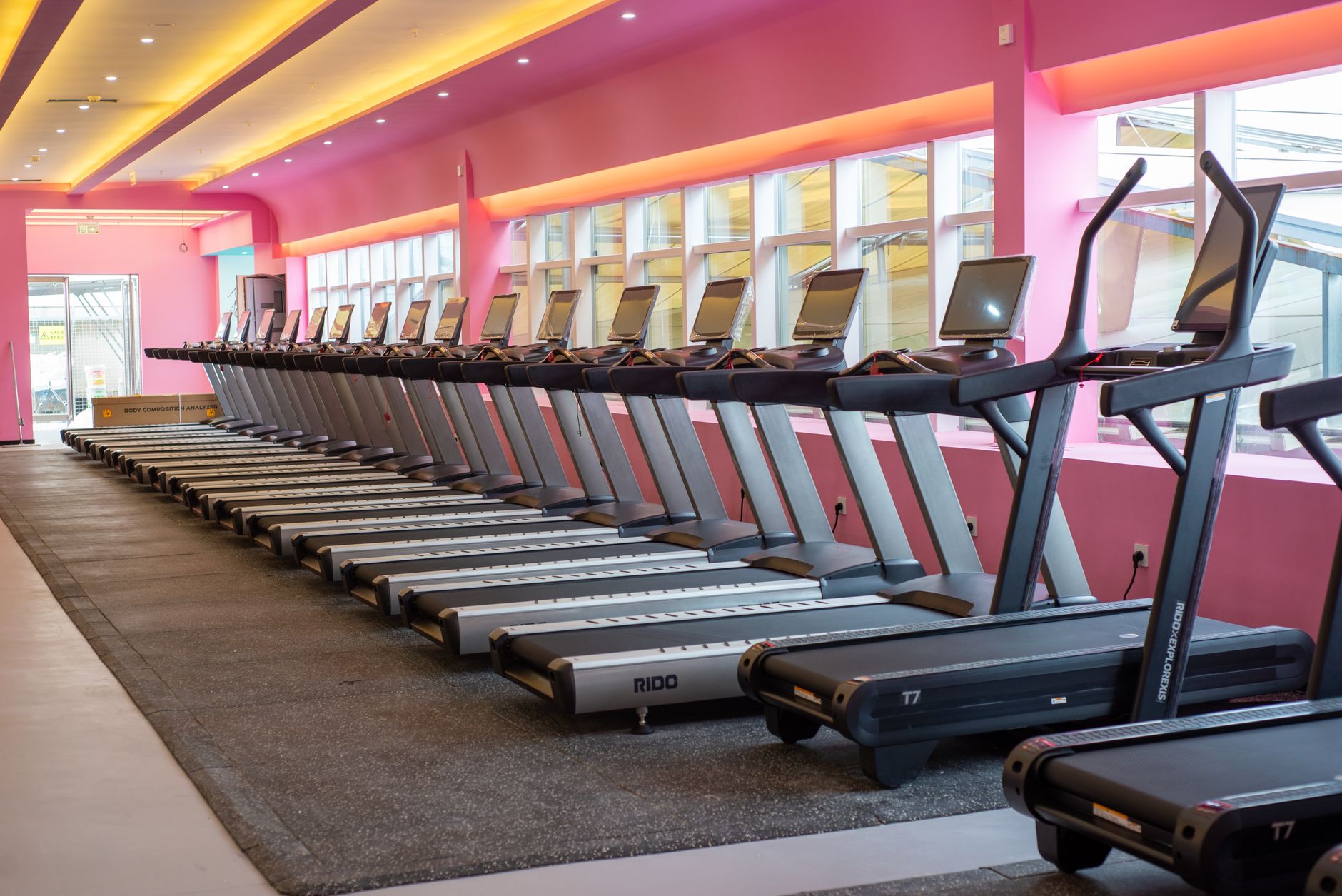
The pattern is clear: the game earns its keep where people stay put and watch for a long stretch, which is mostly the cardio deck and the lobby. Everywhere else it is noise. If you've already zoned your cardio area by sightline, the groundwork in our cardio area TV setup guide carries straight over to game night.
A zone plan for showing sports at the gym
Treat the big game as a temporary assignment for specific screens, not a takeover. A workable plan for a mid-size club looks like this:
- Cardio deck: Put the game on a defined group of screens, ideally the ones facing the treadmills and bikes where members settle in for a long session. Leave the rest of the cardio screens on their usual channels so non-fans still have options.
- Lobby and front desk: One screen with the game and captions on. Members checking in get the score, and anyone waiting for a friend has something to watch.
- Free-weight and strength floor: Keep it as is. People lifting heavy don't need a big play pulling their eyes up mid-rep.
- Studios and class rooms: No change. Instructors need the room, and game audio leaking in undercuts the class.
- Locker room or lounge: Optional. If members linger there, a screen with the score can work; our take on gym locker room TV covers when that space is worth a screen at all.
If your facility has several distinct areas, the same thinking applies at a larger scale. Our multi-zone venue setup guide walks through planning programming, sound and control area by area.
Tell members before kickoff
Most game-night complaints are about surprise, not the game itself. A regular who walks in and finds every screen changed feels like the gym was rearranged without asking. The same member who saw a note two days earlier usually shrugs it off.
A few simple steps cover it:
- Announce it where members already look. A line in your app, a post on your social channels and a sign at the front desk a few days out.
- Be specific about screens. "The game will be on the cardio screens along the window and the lobby TV; all other screens stay on regular programming" answers the question before it's asked.
- Say when it ends. Members are more relaxed about a change when they know the screens go back to normal after the final whistle, not at some vague later point.
- Keep the tone neutral. In a city split between two teams, or when a local rival is playing, skip the team cheerleading in your messaging. You're the venue, not a fan section.
- Brief the staff. Whoever is on the desk that night should know the plan and the reason for it, so they answer the same way every time.
After the game, switch the screens back promptly. Leaving the postgame show running for an hour quietly turns a one-night arrangement into the new normal, and the members who tolerated it for the game won't tolerate it indefinitely.
Handling channel requests on game night
Even with a plan, someone will ask for a different game, a different channel or the sound turned up. The goal is to give staff an easy, consistent answer rather than leaving them to referee.
- Name the flexible screens. Pick one or two screens staff can change on request. Everything else stays on the plan.
- Decide who holds the remote. Members changing screens themselves is how one person's preference ends up on a whole row.
- Plan for overlapping games. If two big games run at once, you'll need enough receivers to show both. Each screen showing something different needs its own source, so count that before the night, not during it.
- Have a polite no. "We keep the sound off on the floor so classes and lifters aren't disrupted, but captions are on" closes most requests without friction.
These requests also tell you something. If members keep asking for the same type of programming, that's useful input when you review your lineup.
Before the next big game: check your programming and setup
Game night only works if the game is actually available on the screens you've chosen, with enough receivers to show what you planned. That depends on your commercial programming package, how your receivers are wired to each zone and whether the event you have in mind is included in what you carry. Availability varies by event and by package, so it's worth confirming well before the date rather than discovering a gap at kickoff.
It also needs to be on a commercial account. A residential service isn't set up for a business floor where members are watching, and your specific situation is something a programming specialist can confirm with you.
Sports Direct is an authorized commercial dealer with 30+ years of experience and technicians and engineers in all 50 states. We can review your current lineup, map receivers to the zones above and help you plan for the next big game. Start with our overview of commercial TV for gyms and fitness centers, see what's included in our programming, equipment and installation services, or reach out to a programming specialist to talk it through.