
On this page
Why a steakhouse bar TV is worth considering
It's Thursday night and the home team is in a tight race. Three regulars would gladly eat at your bar, but only if they can follow the game. Without a screen, they eat somewhere else and come back on a quiet night. A steakhouse bar TV won't turn your room into a sports bar. Its job is to keep those guests in your seats, ordering a ribeye and a second bourbon instead of wings down the street.
The worry is fair. You've invested in lighting, linens, a wine list and service that justify your check average. A glowing screen in the wrong spot can make a white-tablecloth room feel like an airport lounge. So the question isn't really whether to have a TV. It's how to keep the TV inside the space that wants it.
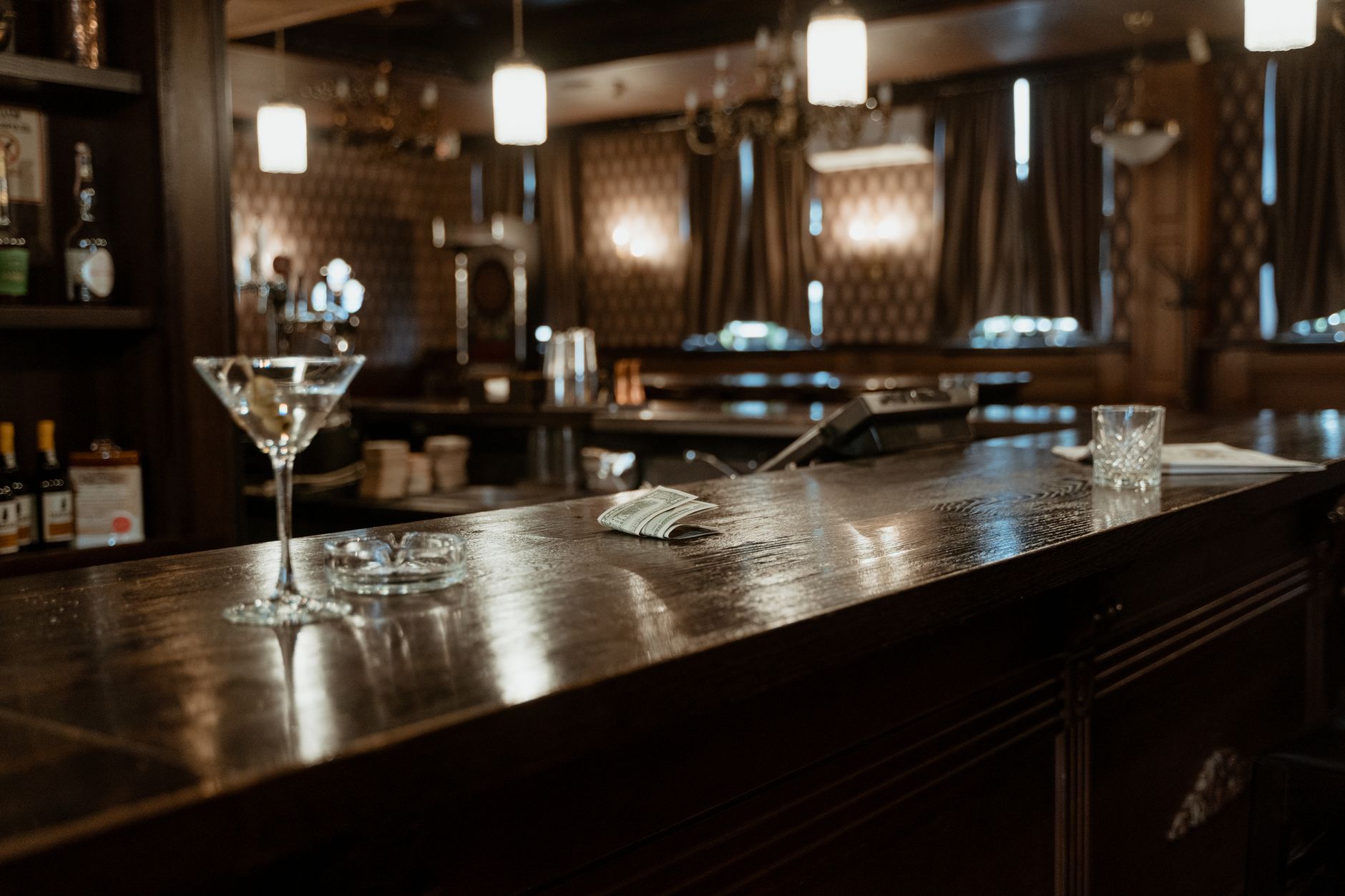
Your bar already runs on different rules from the dining room. It serves solo diners, after-work drinks and guests waiting for a table. That crowd welcomes a game. The couple at table twelve celebrating an anniversary does not. Treat the two as separate rooms, even when no wall divides them. We cover that split in more detail in different TV rules for the bar and the dining room.
Placement: aim the screen at the bar stools, not the dining room
Placement matters more than any other choice you make. A small screen in the wrong place does more damage than a larger one in the right place.
- Face the stools. Put the screen where bar guests look up naturally: the end of the bar, a side wall facing the rail, or a recessed niche in the back bar. Leave the center of the back bar for bottles and lighting. That display is part of what guests are paying for.
- Walk every sightline at dinner lighting. Sit in each dining chair that has any view of the bar. If you can see the screen from a two-top, guests can too. Moving the mount a few feet or angling it slightly often fixes this.
- Watch for mirrors and glass. Mirrored back bars, wine walls and glass partitions can bounce a bright screen straight into the dining room. Check reflections at night, when the room is darkest.
- Keep it out of the first impression. Standing at the host stand, a new guest should see the room before they see a TV.
- Mount it lower than a sports bar would. A screen at stool eye level reads as a convenience. One high up near the ceiling reads as a sports venue, and it's harder to watch from a stool anyway.
Size and finish: make the screen look like part of the room
For most steakhouse bars, one well-sized screen beats several smaller ones. Size it for the distance from the stools, not for the dining room. If you can read the score from the far end of the bar, the screen is big enough. Going larger only spreads light into the rest of the room.
The finish counts as much as the size. Surround the screen with millwork that matches the bar, or set it into cabinetry with doors or a sliding panel that close on nights without a game. Hide the cables and the receiver. Bare wires and a blinking box on a shelf undo careful design quickly.
Picture settings matter too. Most TVs ship in a bright showroom mode built to stand out in a store, which is exactly what you don't want here. Turn the brightness down to suit your lighting. If you have more than one screen, match them so they look the same. Calibrating bar TV picture settings walks through how.
| Setup | Works well when | Watch out for |
|---|---|---|
| One screen at the end of the bar | The bar is compact and most stools face one direction | Guests at the far end may need to turn their heads |
| Two screens, one at each end | The bar is long or L-shaped | Twice the light, so check dining room sightlines twice |
| Screen concealed in cabinetry | Game nights are occasional and the room's look comes first | Staff have to remember to open and close it |
| Screen only in the private dining room | Groups want a game, but the bar should stay screen-free | It needs easy guest controls; see our private dining room TV setup guide |
Sound: captions by default, volume by exception
In an upscale room, game audio is what turns "discreet" into "distracting." A few habits keep it under control:
- Leave captions on. Bar guests can follow the game in silence, and the dining room never hears it. Our notes on closed captions in restaurants and bars cover readable settings.
- Keep music as the house soundtrack. Your background music is part of the experience you're selling. The game should sit quietly alongside it, not compete with it. See how to balance background music and TV audio.
- Zone the audio if you can. If the bar has its own speakers on a separate control, a manager can bring up game sound at the rail without touching the dining room.
- Save volume for the big moments. The last few minutes of a close game or a late-night crowd at the bar can earn some sound. A random midweek inning doesn't.
House rules that keep game nights on-brand
The hardware gets you halfway there. The rest is a simple policy your staff can follow without asking a manager every time.
- Who controls the screen. Pick one role per shift, usually the lead bartender, and store the remote behind the bar.
- What plays when there's no game. Choose between screen off, cabinet closed, or a muted, calm channel. Avoid loud news and anything that looks like an ad.
- Which games make the cut. Hometown teams and major events are a yes. A low-stakes matchup during peak dinner service might be a no.
- Volume policy. Write it down. For example: captions only until the dining room thins out, then low bar audio if guests ask.
- Big-event nights. For a championship or a hometown playoff run, decide ahead of time whether the bar takes reservations. Then guests and staff both know what to expect.
One practical point: TV shown to guests in a business usually runs on a commercial programming account, not a home subscription. The right setup depends on your venue and how you use the screen, so it's worth confirming with a specialist before game night rather than after.
Planning your bar screen with a specialist
The best steakhouse bar setups look simple because the decisions were made in the right order: room first, then placement, then sound, then programming. Sports Direct | DLM Media is an authorized commercial dealer with 30+ years of experience and technicians and engineers in all 50 states. We help restaurants plan commercial programming, equipment, installation and support around the room they've already built.
If you're weighing whether a screen belongs at your bar at all, our take on one discreet TV in a wine bar is a useful comparison. When you're ready, talk with a programming specialist about your space. There's no pressure, just a conversation about what fits.