
On this page
Why Owners Consider TVs in Bar Bathrooms
It is late in the fourth quarter, the score is within a field goal, and a regular at the rail has been putting off a trip to the restroom for twenty minutes. Every bar owner has watched that standoff. TVs in bar bathrooms are one answer to it. The guest steps away without missing the play, comes back in a good mood, and is more likely to order another round than to close out and catch the ending somewhere else.
There is a novelty factor too. A screen above the sink is the kind of detail people mention to friends and take photos of. For a sports-first room, it tells guests you take the game seriously everywhere, not just on the main wall.
The catch is that a restroom is the hardest room in the building for electronics. It gets wet, it gets cleaned with strong chemicals, it is where unsupervised guests are most likely to tamper with things, and on a busy night nobody on staff looks at it for long stretches. Guests will almost always enjoy a restroom TV in a sports bar. The real question is whether you can keep it working, clean and secure without handing your team a chore they will skip.
What a Restroom Screen Really Asks of You
Buying the display is the easy part. The ongoing care is where a bathroom screen in a bar either earns its place or becomes the dark, smudged rectangle guests joke about.
| Factor | What can go wrong | How careful owners handle it |
|---|---|---|
| Moisture | Splashes from sinks, wet hands, mop water and humid air reach the screen and its ports | Mount high and away from sinks and stalls; consider a protective enclosure or a display built for harsher spaces |
| Mounting | Guests grab, tilt or try to remove the screen | Use a tamper-resistant mount, place it out of reach and hide every cable |
| Cleaning | Disinfectant sprayed directly on the screen damages the finish and electronics | Set a clear rule: never spray the screen, wipe with a dry or lightly dampened cloth |
| Power and wiring | Outlets and cable runs near water need extra care | Bring in a licensed electrician and confirm local requirements before you commit |
| Signal | The restroom is far from the receivers behind the bar | Plan how the feed reaches the room while walls are open |
| Staff attention | A frozen or wrong-channel screen goes unnoticed for hours | Add a quick screen check to existing restroom rounds |
There is also the account side. Adding any TV can change how your commercial programming is set up, depending on how your service and equipment are configured. That varies from bar to bar, so confirm it with a specialist before anything goes on the wall. Our page on adding TVs to your business covers the questions to ask first.
Where a Restroom TV Fits and Where It Doesn't
A bar restroom game TV works best in a specific kind of venue. It tends to make sense when:
- Big games are the reason your busiest nights happen, and guests already plan their evening around the clock.
- The restroom has a dry wall well above head height that people naturally face while waiting or washing their hands.
- Your staff already walk the restrooms on a regular rotation during service.
- You are remodeling or building out, so wiring can be run before walls close.
It is usually a poor fit when:
- The restroom is a small single stall and the only open wall sits next to the sink or toilet.
- Vandalism is already a recurring problem in that space.
- The screen would become the one TV nobody ever checks.
- Your room is built around conversation and the game is background, not the main event.
Two details matter more than owners expect. First, treat every restroom the same. If one gets a screen and another doesn't, guests notice and it reads as an oversight. Second, keep the screen strictly on the game.
Setting Up a Restroom Screen So It Stays Useful
If you decide to go ahead, a few setup choices keep the screen from turning into a maintenance headache.
- Mirror the main game. The restroom screen should show whatever your primary screen is showing. It should never become another channel decision for staff on a busy night. If you already have a policy for which game gets the sound, use the same priority order here.
- Captions on, sound off or very low. Restroom acoustics are harsh and audio competes with the main room. Captions do the job, as covered in our look at closed captions in bars and restaurants.
- Mount high and lock it down. Use a secure mount, conceal cables in the wall and keep the screen well clear of splash zones. The commercial TV mounting and placement guide walks through viewing height and angle.
- Keep the controls out of reach. No remote and no accessible buttons in the restroom. Control the screen from behind the bar.
- Put it on the checklist. Add the restroom screen to opening and closing routines so a blank or frozen picture gets caught early. Our tips on training staff on bar TVs apply here too.
A Simpler Option: The Restroom Hallway Screen
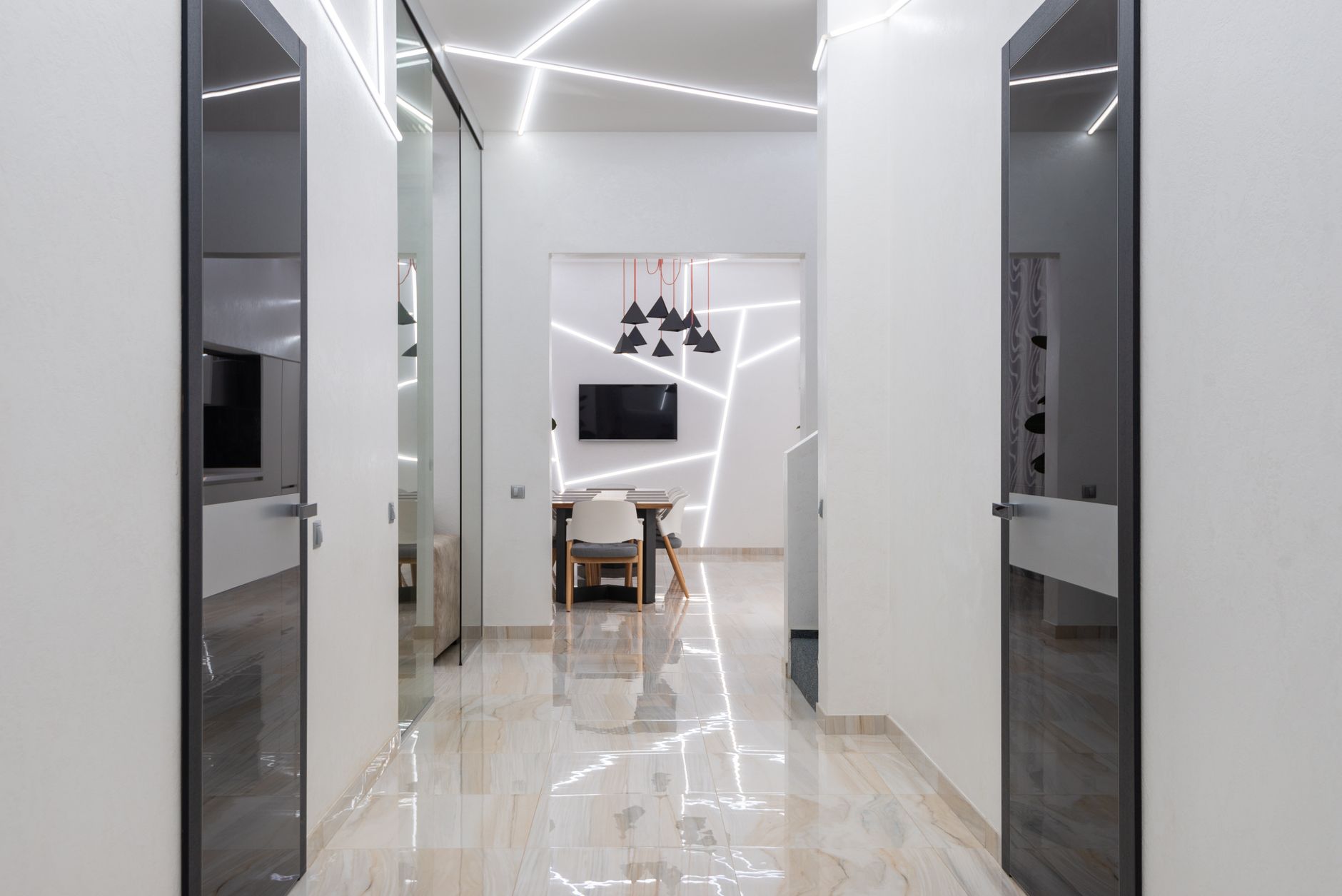
Many owners get most of the benefit with a screen in the corridor leading to the restrooms instead of inside them. A guest walking back and anyone waiting in line can follow the play, and the screen sits in a drier space that staff pass constantly.
The hallway approach has real advantages:
- Less exposure to water and cleaning chemicals.
- Staff see it, so problems get spotted and fixed during service.
- It serves everyone in line regardless of which restroom they are waiting for.
- It is easier to reach for cleaning and service calls.
It does not carry quite the same novelty, and it will not help a guest who is already inside. But if your goal is simply that nobody misses a big play on the way to the restroom, it often does the job. When you map sightlines from each seat, look at the restroom path as its own zone. A hallway screen there can also close a gap your main layout misses.
A sensible route for many bars is to start with the hallway, watch how guests use it for a season, and add screens inside the restrooms later if your crowd keeps asking for them.
Making the Call for Your Bar
Before you decide, answer a few honest questions:
- Do close, late-game moments actually drive repeat visits in your room?
- Is there a wall in each restroom that stays dry and sits out of reach?
- Will someone own the screen on every shift, from wiping it down to checking the picture?
- Do you know how an added screen affects your programming account and equipment?
If the answers are mostly yes, a restroom TV can be a memorable touch that fits a sports-first bar. If they are mostly no, the hallway screen is likely the smarter use of wall space and staff attention.
Either way, the programming and equipment questions are worth settling before you buy hardware. Sports Direct is an authorized commercial dealer with technicians and engineers in all 50 states, and our programming, equipment and installation services cover how to feed a new screen and mount it properly. If you want to talk it through, reach out to a programming specialist for a no-pressure conversation about your layout.