
On this page
How a Satellite Dish for Business Fits Your Building and Lease
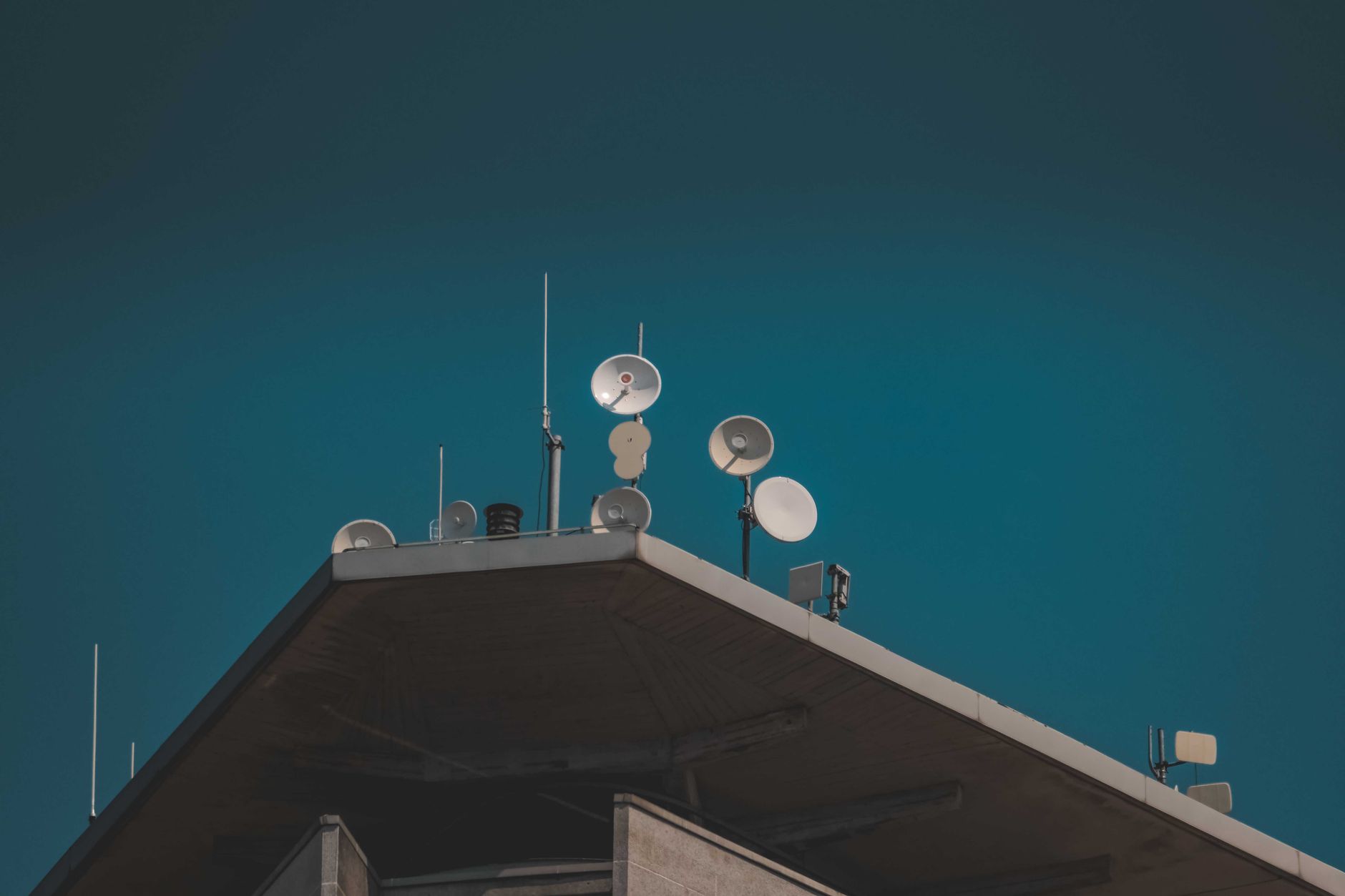
A satellite dish for business looks like a simple piece of hardware, but where it goes is decided by three things at once: the sky, the building and the paperwork. Most questions in this FAQ come from those three pulling in different directions. The best spot for signal may be a roof you do not control. The spot your landlord prefers may sit behind a parapet wall or a neighbor's HVAC unit.
The sky part is fixed. Satellites serving the U.S. sit over the equator, so a dish needs an unobstructed view toward the southern sky. Trees, taller buildings, rooftop equipment and even signage can get in the way. That rarely changes, and it is the first thing a technician checks.
The building part is about access and protection. Who can get onto the roof, how the dish is held down, how cable gets inside and where it lands near your equipment all shape the install. A clean cable path to your receivers matters as much as the dish itself, because that is what decides how neatly your screens can be wired.
The paperwork part is your lease and any property rules. Those vary widely, and we do not interpret them for you. What helps most is a clear, written description of what will be installed and where, so your property manager has something concrete to approve.
What Changes for Strip Malls, Standalone Restaurants and Offices
The same dish can be easy or complicated depending on the type of property you occupy.
| Property type | Typical dish location | What usually takes the most time |
|---|---|---|
| Strip mall or shopping center unit | Shared roof above your unit | Landlord sign-off, roof access, routing cable down into your space |
| Standalone restaurant or bar | Your own roof or a side wall | Clearing obstructions, protecting the roof, keeping the dish out of sight from the street |
| Office suite in a multi-tenant building | Common roof, sometimes a pole or balcony | Building engineering approval, riser or conduit access, after-hours scheduling |
| Ground-floor retail with no roof rights | Rear wall or pole mount | Finding a clear southern view at a lower height |
In a strip mall, the roof is often a patchwork of tenants' units, abandoned dishes and old cable runs. Expect the property manager to care about where the dish sits relative to other tenants and how the roof membrane is protected. In a standalone restaurant, you usually have more freedom but also more responsibility for roof upkeep. Offices tend to involve the most people: a building engineer, a property manager and sometimes your IT team, who will want to know where the receivers live. If you are planning screens for a lobby or break room, our page on commercial TV for corporate offices covers the programming side.
Restaurants and bars should also think about how the dish location relates to the room. A dish placement that forces a long, awkward cable route can limit where screens go later. That is why restaurant installation planning begins with the screens and works back toward the dish.
What to Check Before a Site Survey
A little preparation turns a site visit into a decision instead of a fact-finding trip. Before anyone comes out, gather:
- Your lease language on rooftop equipment, exterior alterations and signage, plus the name of whoever approves them.
- Roof details if you can get them: roof type, age, and whether a roofing warranty is in place and who holds it.
- Access rules: how the roof is reached, whether a key or escort is needed, and any hours when work is not allowed.
- Existing equipment: old dishes, cable entering the building, and anything a previous tenant left behind.
- Your screen plan: how many TVs, roughly where, and where you would like receivers to sit. The commercial TV mounting and placement guide helps you sketch this.
- Your timeline, especially if you are opening a new location or remodeling.
Coordinating Install Day With Property Management
Once placement is agreed, the remaining work is coordination. Confirm in writing where the dish goes, how it is mounted and where cable enters the building. Share the technician's arrival window with the property manager and anyone who controls roof access. If the building requires a certificate of insurance or a contractor sign-in, sort that out a few days ahead, not on the morning of the job.
After the install, keep a simple record: a photo of the dish location, the cable entry point and where the receivers are. That record pays off when something goes wrong, when a roofer needs to work around the dish, or when you relocate or remodel your business. It also speeds up troubleshooting; if every TV loses signal at once, the no-signal triage guide starts at the dish.
Sports Direct | DLM Media is headquartered in Phoenix, AZ, and has technicians and engineers in all 50 states. To see how installation fits alongside programming, equipment and support, look over our installation and support services, or talk with a programming specialist about your building and lease.