
Why the best screens never go dark
A plain-English guide for operations and IT buyers on how satellite, streaming, and redundancy keep every commercial screen live, from a commercial-only provider with techs in all 50 states.
Free, no-pressure consultation and venue review






Uptime is engineered, not lucky
A commercial feed that stays live all day is not an accident. It is the product of how the signal is received, how it is distributed, how many layers of redundancy sit behind it, and who is watching it stay up. This guide walks an operations or IT buyer through each layer so you know exactly what to specify and what to ask.
From the sky to every screen, step by step
The same picture has to travel a long way before a guest ever sees it. Here is the path, and where reliability is won or lost at each stage.
The feed arrives at the venue
Programming reaches your building either over the air by satellite dish or over the internet by a managed stream. Satellite does not sit on your local network, which is why it stays dependable even when your office bandwidth is busy. Streaming rides your connection and is easier to wire into a modern building.
The headend receives and decodes it
Commercial-grade receivers, not consumer boxes, take that feed and prepare it for distribution. The headend is specified for the number of channels you show, the hours you run, and the number of screens you feed, so it can carry a full public-viewing load all day without heat or memory issues that cause dropouts.
Distribution carries it to every screen
From the headend, distribution amplifiers, coax or IP runs, and splitters push the same clean picture to every display in the room. Wiring is sized so the last TV on the run looks as good as the first, with no snow, tiling, or audio drift on your busiest wall.
Monitoring watches it stay up
Reliability is not a one-time install. Internet-connected receivers report their health, so issues can be spotted and serviced before they become a dark screen. This is the difference between a feed that happens to work today and a system engineered to stay live.
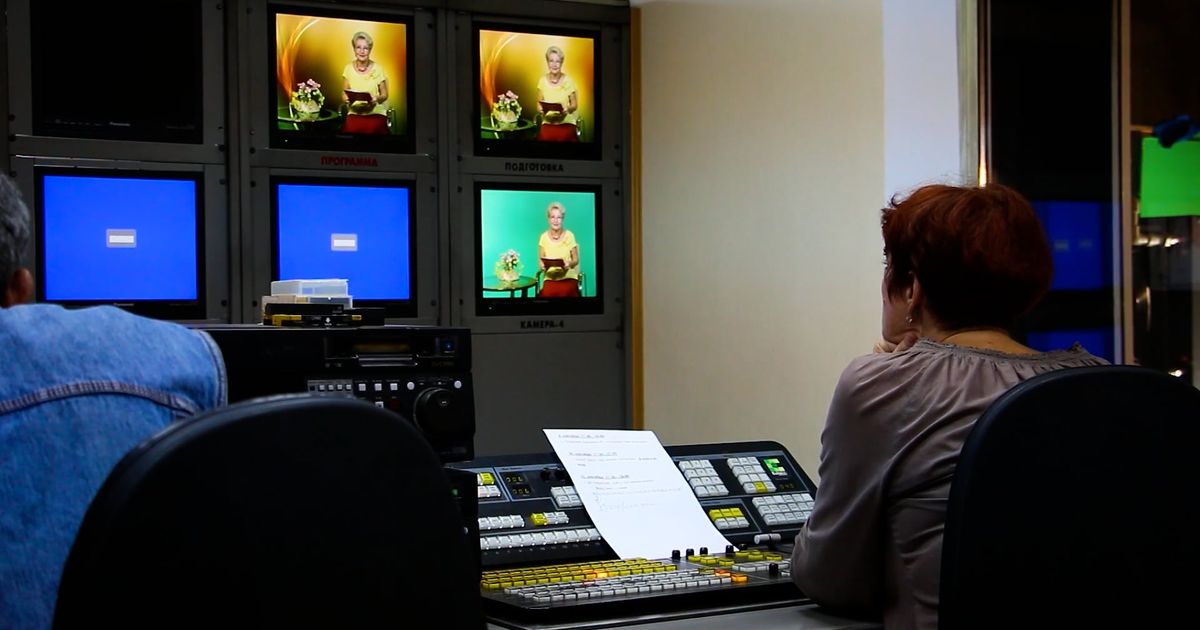
Layers that keep the picture up
Reliability at scale is about not depending on any single path. Each layer below is a backstop, so one weather event, one busy network, or one aging part never takes the whole room dark.
Internet-assisted delivery
Modern receivers can pull an internet-assisted feed when the over-the-air signal degrades in heavy weather. Instead of a few minutes of tiling during a storm, the picture holds, which is the core of the worry-free reliability model built for public viewing.
Satellite plus streaming options
Because programming is available on satellite and/or streaming, a venue is not locked into a single path. Where a building supports it, delivery methods can complement each other so a single point of failure does not take the whole room dark.
Business-grade equipment
Public venues run more screens, longer hours, and a wider channel mix than any living room. Equipment specified for continuous commercial use, then serviced on a schedule, is what turns a fragile setup into a dependable one.
One accountable partner on call
When something does need attention, you reach a commercial team, not a consumer help line. With technicians and engineers in all 50 states, the same partner who designed the system is the one who keeps it running.
The variables that decide whether a feed stays live
Most unreliable venues fail on the same short list of causes. Here is what to check before you sign anything.
Bandwidth and network health
Internet-assisted delivery expects roughly 2 Mbps per receiver. A saturated or misconfigured venue network is one of the most common and most fixable causes of an unreliable feed, so we scope your connectivity before we design the system.
Weather and line of sight
Any over-the-air feed can degrade briefly in severe weather. Redundancy, dish placement, and internet assist are what keep a few minutes of atmospheric fade from turning into a blank wall during the biggest moment.
Correct headend sizing
A headend built for a small office cannot carry a full sportsbook or a national chain location. Sizing the receivers and distribution to your true screen count and viewing hours is what prevents the slow, intermittent failures that are hardest to diagnose.
Proactive service, not reactive repair
Receivers, amplifiers, and cabling age under daily commercial load. Health monitoring and scheduled service catch the small issue before it becomes an outage, which is why the experience stays consistent every day you are open.
Two delivery paths, one dependable result
Programming is available on satellite and/or streaming. Neither is universally better, the right path depends on your building, your bandwidth, and your screen count.
Satellite delivery
- Does not sit on your local network, so office bandwidth never competes with the picture
- Professionally installed and dependable across high-traffic public rooms
- Ideal where a clean line of sight and full channel lineup are the priority
Streaming delivery
- Flexible and plug-and-play, easy to wire into a modern building over Ethernet or Wi-Fi
- Requires adequate, reliable bandwidth at the venue, roughly 2 Mbps per receiver
- Well suited to locations where running a dish is impractical or a network path already exists
The 99% effective-signal figure is based on a nationwide study and reflects internet-assisted delivery (SignalSaver-style). It typically requires an internet-connected receiver with a minimum of 2 Mbps per receiver, and is not an unconditional guarantee. A specialist reviews your venue during a free consultation.
Reliability you feel on the busiest days
The screen stays live when it matters
On the biggest game or the busiest lunch, redundancy and monitoring keep the picture up instead of leaving a dark wall that sends guests to the venue down the street.
Your team stops troubleshooting TV
A dead feed no longer means a manager on hold with a consumer help line. One commercial partner owns the design, the install, and the fix across every location.
Every location behaves the same
Multi-site operators get the simplicity of a single provider, so the standard you set at one location is the standard on every screen in the portfolio.
Signal reliability, answered
What operations and IT buyers ask most before they request a quote.
Satellite delivery arrives over the air by dish and does not sit on your local network, so it stays dependable even when your building bandwidth is busy. Streaming delivery rides your internet connection and is easier to wire into a modern building, but it depends on adequate, reliable bandwidth at the venue. Programming is available on satellite and/or streaming, and the right choice depends on your building, your screen count, and your connectivity, which a specialist reviews during a free consultation.
A consumer setup is built for one living room. Public venues run more screens, longer hours, and a wider channel mix, so the receivers, headend, and distribution must be specified for continuous commercial use. Reliability also depends on redundancy and monitoring rather than a one-time install, which is why a commercial-only provider engineers the system to stay live rather than simply hooking up a box.
Heavy storms can briefly degrade any over-the-air feed. Internet-assisted delivery lets an internet-connected receiver hold the picture when the satellite signal fades, so a few minutes of weather does not turn into a blank wall. It typically requires an internet-connected receiver with a minimum of about 2 Mbps per receiver.
Internet-assisted and streaming delivery generally expect roughly 2 Mbps per receiver. A saturated or misconfigured venue network is one of the most common causes of an unreliable feed, so we scope your connectivity and design the system around your true screen count before install.
You reach one accountable commercial partner, not a consumer call center. With technicians and engineers in all 50 states, the same team that designs and installs your system supports it, so multi-location operators keep a single point of contact across every site.
No. The 99% effective-signal figure is based on a nationwide study and reflects internet-assisted delivery. It typically requires an internet-connected receiver with a minimum of 2 Mbps per receiver and is not an unconditional guarantee. A specialist reviews your specific venue, bandwidth, and screen layout during a free consultation.
Speak with a programming specialist
Free and no-pressure. We review your venue, bandwidth, and screen layout before we quote.
Get a worry-free feed for your venue
Tell us about your locations, screen count, and connectivity, and a commercial programming specialist follows up fast with a system built to stay live.
Where to go next
See why worry-free reliability is central to how we work, how our install and support team delivers it, and how multi-site operators standardize every screen under one partner.
Never go dark on the biggest day
Talk to a commercial programming specialist and get a system engineered to stay live across every screen.