
On this page
Who tattoo shop TV service fits
A tattoo studio has two very different audiences for a screen. Up front are walk-ins waiting on a consult, friends who came along for support, and clients signing paperwork. At the stations is someone holding still for three, four or six hours while an artist works. Tattoo shop TV service works when it treats those as separate jobs, instead of hanging one screen on the wall and hoping it covers both.
It suits private studios with one room and a couple of chairs, busy street shops with a full walk-in lobby, and owners with more than one location who want the same setup and one account everywhere. It also fits shops that share space with piercing or cosmetic work, where the waiting area stays busy all day.
Because the screens play in a business, they need commercial programming rather than a home subscription. Home accounts are set up for residential viewing, not for a shop open to the public. Which commercial option fits depends on how your screens are used, and a specialist can walk you through it.
What a good setup looks like in a tattoo studio
The lobby screen
The tattoo shop waiting room TV should be easy to see from the seating and the counter, and never mounted behind whoever is checking clients in. Keep captions on and the sound low or off. The front desk is where deposits, placement and aftercare get discussed, and nobody should have to talk over a broadcast.
Pick programming people can drop in and out of: local news and weather, sports highlights, light lifestyle shows. A walk-in may glance up for a few minutes, while a companion might sit through an entire session. Something that makes sense in short stretches serves both. Many shops pair the lobby screen with commercial-free background music rather than TV audio, which sets a mood without competing with conversation. Our commercial TV for gyms, salons and studios covers both options.
Station-visible screens for long sessions
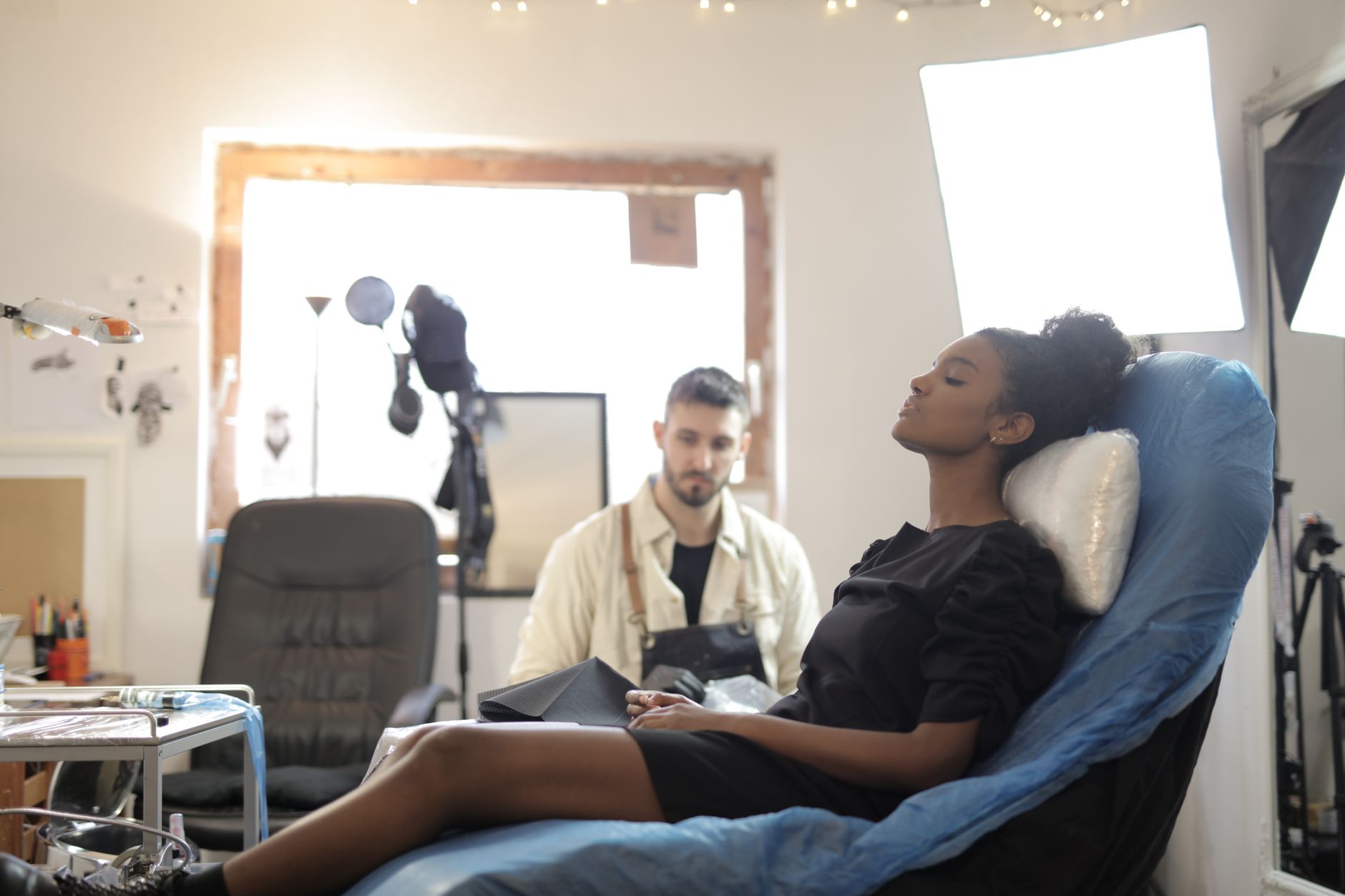
A TV for long tattoo sessions only helps if the client can actually see it. Placement has to follow body position, not whichever wall is easiest to drill:
- Seated clients (forearms, hands, calves) can usually see a wall screen across from the chair.
- Clients lying on their back need a screen mounted higher or angled down, sometimes from the ceiling.
- Clients lying face down for back pieces often can't see a wall screen at all. Be honest with yourself here: some positions simply don't allow viewing, and for those clients audio may matter more than the picture.
The artist matters just as much. Keep screens out of the artist's working field, and watch for glare or reflections under bright work lights. A screen that pulls the artist's eye or throws light across the skin causes problems instead of solving them.
Personal audio works well at stations. Wireless headphones let one client follow a game or a movie while the next station has the shop playlist or quiet conversation. Treatment centers face the same problem with long chairside sessions, and the approach in our dialysis center TV FAQ carries over to tattoo stations.
Sound, control and the artist's focus
Most friction around a TV in a tattoo studio comes down to two questions: who hears it, and who changes it. Settle both before anything goes on the wall.
| Area | Main viewer | Sound | Typical programming | Who controls it |
|---|---|---|---|---|
| Lobby | Walk-ins and companions | Captions, low or off | News, weather, highlights | Front desk |
| Station | Client in the chair | Headphones or captions | Client's pick from the lineup | Client or artist |
| Break room | Artists between clients | Staff preference | Whatever the crew likes | Staff |
Many artists work to their own music, so station TV audio usually belongs in headphones, not on room speakers. The trade-offs are similar to the ones salons face, laid out in our post on salon TV sound on or off.
How we plan and install it
Sports Direct | DLM Media is an authorized commercial dealer with 30+ years of experience and was one of the Original 6 Commercial DIRECTV dealers. You can read more about the company. Every project follows the same four steps:
- Assess the space. We look at your floor plan, station layout, the positions clients spend their sessions in, lighting, cable paths and your internet connection.
- Design by viewing type. Lobby, stations and break room each get their own plan. We work out how many screens need to show different things at once, which tells you how much receiver equipment you need, and we put together a custom programming quote.
- Install. Our technicians and engineers work in all 50 states. Mounts are positioned clear of the artist's movement, cables are run neatly, and the work is scheduled around your appointments, often before opening or on a closed day.
- Support. You get one point of contact for programming, equipment and service questions, across every location you run. Our services overview explains what ongoing support covers.
What to think about before deciding
- How many screens need independent content. A lobby on the news while three stations watch three different things is a different setup than every screen sharing one channel.
- Client positions. List the pieces you do most. A shop doing mostly back work plans differently from one doing mostly arms and hands.
- Lobby tone. Your waiting area is part of your brand, just like your portfolio wall. Decide what fits and what doesn't.
- Sound policy. Agree on captions, headphones and music before installation, not after the first complaint.
- Growth. If you plan to add chairs or open a second shop, plan for it now. Our page on adding TVs to a business covers what changes when you expand.
When you're ready, a programming specialist can talk it through and put together a quote shaped around your studio. Just reach out through our contact page.